
Blog
Electrical equipment teams burn senior hours cross-referencing prior builds. Turn specs, test reports, and approvals into an answerable knowledge base.

In electrical equipment — relays, industrial controls, switchgear, drives — most “new” products are variants: a different rating, a different standard, a customer requirement layered on a proven design. The engineering question is rarely can we build this? It’s have we built this before, and what did we learn? Answering it should take minutes. In most organizations it takes days.
The evidence is scattered across global sites, legacy drives, superseded part numbers, and the memories of a few senior engineers who were there when the platform shipped.
And the clock matters. The customer who asked for the variant asked your competitors too. The team that can trace precedent in an afternoon quotes while the others are still searching.
The people who can trace a variant’s ancestry — which platform it derived from, which certifications carried over, which failure modes appeared at which ratings — are the same people you need designing the next platform. Every hour they spend digging through old specs and test reports is an hour of engineering the business paid for twice.
Meanwhile, quotes wait. Certification plans get scoped conservatively because nobody is sure what prior test evidence still applies, so budgets carry re-qualification work that may be redundant. Occasionally a team re-tests something the organization qualified years ago — pure waste, invisible in any report.
For products with decades-long lifecycles and standards that evolve underneath them, this hunt never ends. It only gets harder as the people who remember retire.
Centralize the technical record in a Product Knowledge Hub — specifications, test reports, approvals, compliance documentation, design reviews — and have we built this before? becomes a question you ask rather than a project you launch.
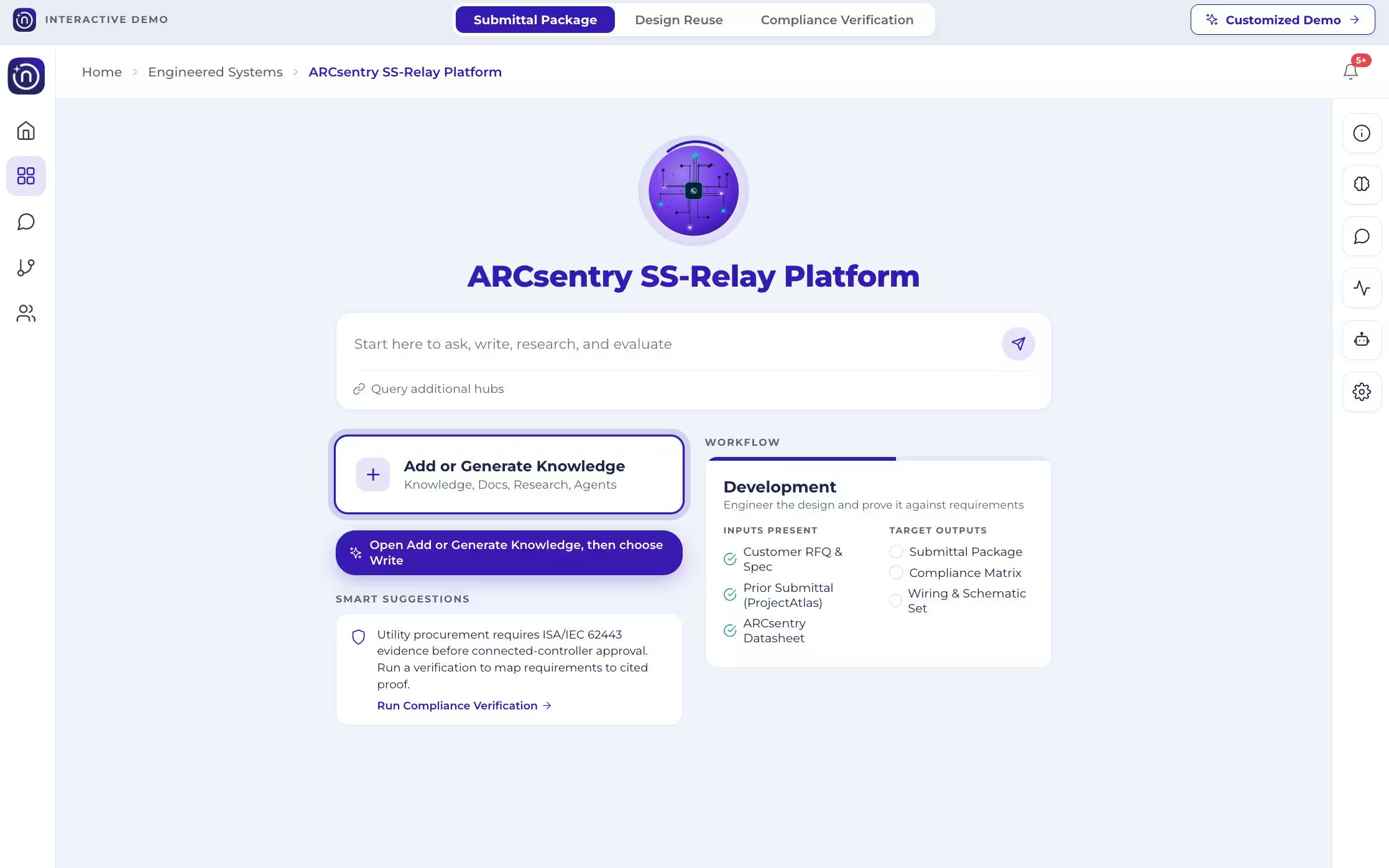
Narratize returns the answer with sources: the prior builds that match, the ratings and standards they were tested against, the approval history, and the design rationale behind the differences. An engineer evaluating a 480V variant of a 240V platform sees what carried over last time, what didn’t, and why, with every claim linked to the document behind it.
Approval and review workflows keep the record governed as new variants land, so the knowledge base stays trustworthy instead of drifting. That governance is what separates an answerable knowledge base from another folder of PDFs: the hub knows which specification is current, which test report was approved, and which revision the customer signed.
The payoff shows up in three places:
For product lines measured in decades, the precedent you can retrieve is a competitive asset. Most electrical equipment manufacturers already own it. They just can’t ask it anything yet.
Start with the platforms generating the most variant requests rather than the whole archive. One product line’s specifications, test reports, and approvals is enough to answer real cross-reference questions in the first weeks, and coverage grows as new variants land.
It surfaces what was tested, against which standard, and when it was approved, with the documents attached. Whether that evidence still satisfies a current standard remains an engineering judgment — but it’s made in minutes with the record in hand instead of days later on a conservative assumption.
The hub is the shared record, so a variant developed in one region becomes retrievable precedent everywhere else. That’s typically where multi-site manufacturers find the largest hidden duplication.
Bring one product line’s history into a hub and ask it your hardest cross-reference question.
.png)
See for yourself how Narratize accelerates 3 Key Narratize Use Cases for Electrical Equipment Manufacturers in this on-demand clickable demo.
Or hop on a Discovery Call today!
Schedule a demo and watch your team's expertise become intelligence the whole organization can use.